
How'd I get that shot?
“Is this a knife I see before me?"

The photograph of the two boys performing on the streets of Oaxaca de Juarez during the Dia de los Muertos (Day of the Dead) celebration is a vivid testament to the vibrancy and cultural depth of this unique Mexican tradition.
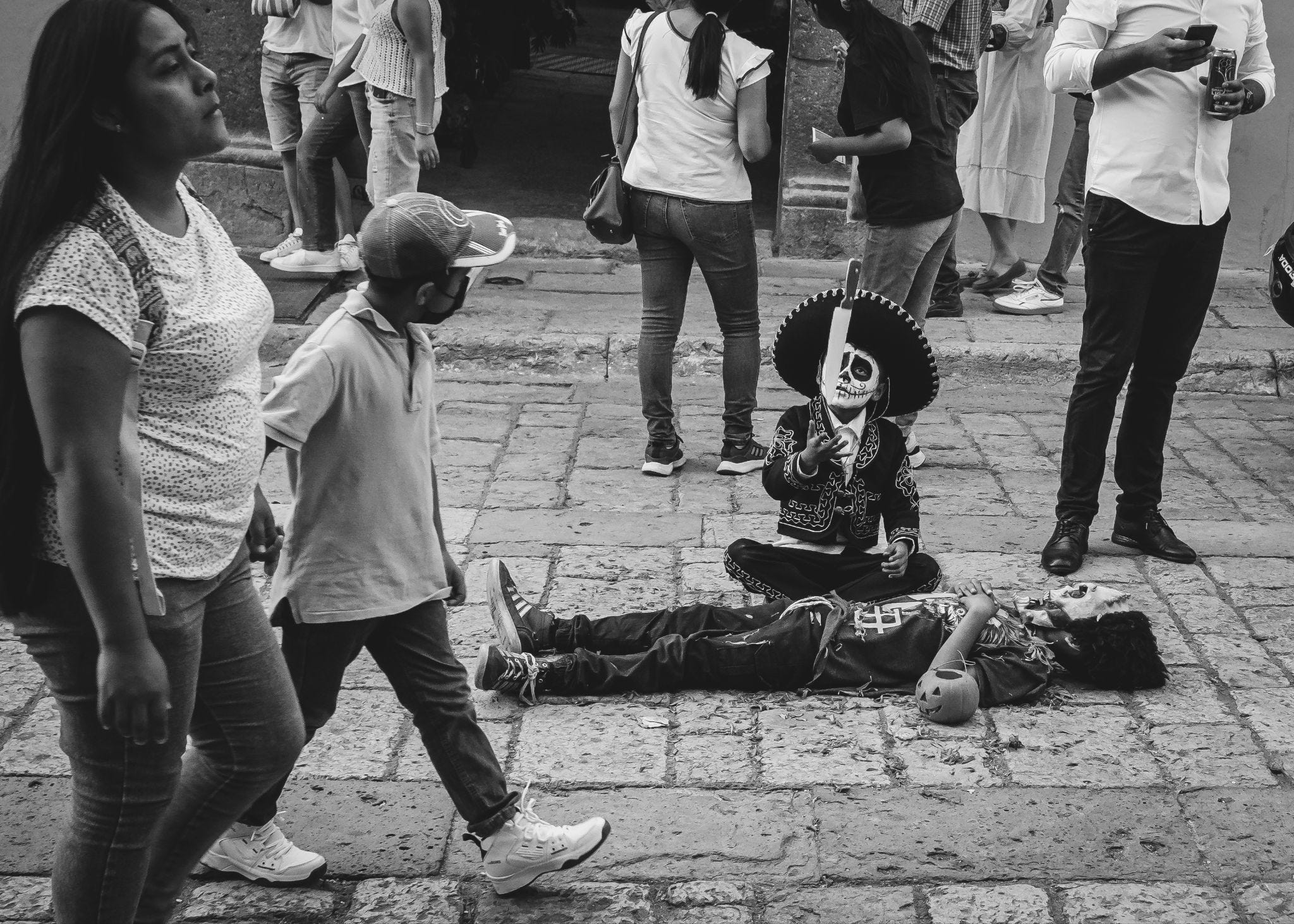
In the image, a young boy, his attire reminiscent of a mariachi band member with the iconic wide-brimmed sombrero and elaborately embroidered charro suit, sits poised, tossing a real knife high into the air. Below him lies his friend, sprawled out as if deceased, wearing a painted face that mimics the traditional calavera (skull) makeup that embodies the spirit of the dead. The theatricality of the scene is unmistakable; the playful yet reverent enactment reaffirms the living relationship between the mortal world and those who have passed.
Capturing the knife in mid air and the concentration the “murderer” has to catch it correctly without losing some fingers was not luck on the one hand and some luck on the other. The timing of when I pressed the shutter is more in line with the “decisive moment” famous documentarian Henri Cartier Bresson described as essential for a still photograph to capture the essence of the moment. The process required my intense concentration to ensure I got the flip at the right moment and still caught the facial expression of the boy. What might be considered luck is that the image also caught the boy in the foreground looking pensively at the knife-flipping drama.
This street performance, part of the elaborate three-day Dia de los Muertos festivities, is far more than mere entertainment; it is a deeply symbolic, ritualistic expression. The image captures one of the lively ways in which the community collectively honors their ancestors, blending performance art with religious homage. The boy’s act of tossing the knife, purportedly the tool of the “killing,” and the recumbent friend’s role as the “victim,” dramatize death and resurrection with humor and intimacy, a physical storytelling that invites passersby to witness the complex dialogue between life and death. Each evening and day of the celebration, performers like these two boys reverently don meticulously crafted costumes and face paint, investing hours into their personas to bring the spectacle to life.
Through this image, one sees the remarkable dedication of the young performers who, despite their youth, understand the gravity of their roles. Dressing up each day and night for the full duration of the festival requires stamina and pride in carrying on a centuries-old tradition. Their performances, repetitive yet never losing their emotional sincerity, serve a dual function: they entertain and educate visitors, but more importantly, they honor their ancestors and cultural identity with dignity and respect.
The boys’ commitment to authenticity is profound. Their costumes, carefully curated and handmade or purchased with pride, are more than clothing; they are essential markers of identity within the festival. The boy’s embroidered suit, tight pants, and silver buttons mirror the traditional attire of Mexican cowboys and mariachi performers, roles steeped in national pride and cultural symbolism. The skeletal face paint worn by both boys echoes the most iconic Dia de los Muertos symbol—the calavera or skull—which serves as a vivid reminder of mortality while simultaneously representing the joyful reunion and remembrance of departed loved ones. The makeup is intricate work, carefully applied to strike a balance between the eerie and the celebratory. Young performers often carry this tradition forward from community teachings or family legacies, learning the symbolic meanings embedded in every brushstroke and thread.
Dia de los Muertos, celebrated from October 31 to November 2, holds significant cultural and religious meaning in Mexico, distinctly different from the largely commercialized Halloween festivities elsewhere. This holiday is rooted in indigenous beliefs about death and the afterlife, merged with Catholic elements introduced during the Spanish colonial period. Mexicans honor Dia de los Muertos not with fear or spooky frights, but rather with profound reverence and thanksgiving. The holiday is a time when the spirits of deceased family members are believed to return to the world of the living, reunited with their families and friends for a brief, joyous visit. Homes and public spaces erect altars, or ofrendas, richly decorated with marigold flowers (cempasúchil), colorful papel picado (cut paper banners), candles, and beloved memorabilia of the departed—photographs, favorite foods, personal possessions—all placed to welcome and honor the returning spirits.
These altars are central to the celebration, transforming homes and public squares into vibrant sanctuaries of memory and love. The street performers contribute to this ambiance by embodying the liminal threshold between the living and the dead, dramatizing stories of mortality in a manner that is both respectful and accessible. The performance of death, including playful enactments like the boy tossing his knife over the “dead” friend, blends the theatrical with the spiritual, reminding communities of their shared mortality while affirming life and continuity.
Unlike Halloween, which often emphasizes fear, horror, and sometimes trivialization of death, Dia de los Muertos treats death as an integral and natural part of existence, with an undercurrent of joyous acceptance. The celebration is a communal act of remembrance, healing, and cultural continuity. It invites reflection on the cyclical nature of life and the enduring bonds that transcend death. For children like the boys in the photo, participating in such performances is both a cultural education and a vital link in passing on these traditions.
The photograph also captures the broader social context of the festivity: the mingling of locals and tourists, residents in casual dress moving through the scene, acknowledging the performance and perhaps reflecting on the powerful symbolism it carries. The cobbled street, the weathered stone of the colonial buildings, and the casual posture of the audience all ground the celebration within the historical and everyday life of Oaxaca de Juarez.
In sum, the photograph is a powerful testament to the vitality of Dia de los Muertos. It encapsulates a celebration that is not about fear or fright but about honoring the enduring presence of those who have passed on. It reveals how young people actively engage with tradition, becoming both storytellers and keepers of memory. The boy’s playful yet serious act of throwing the knife, the grounded stillness of his friend, and the attentive crowd reflect a moment where performance becomes ritual, and ritual becomes a living celebration of life, death, and remembrance in Oaxaca de Juarez.
I've written for many years and never found an occasion to use "theatricality" ... but you have ...and have done it expertly. I love the stories behind your photos (and your photos). Keep them coming!