
Molten Reflections…
chasing the secret Gene Smith

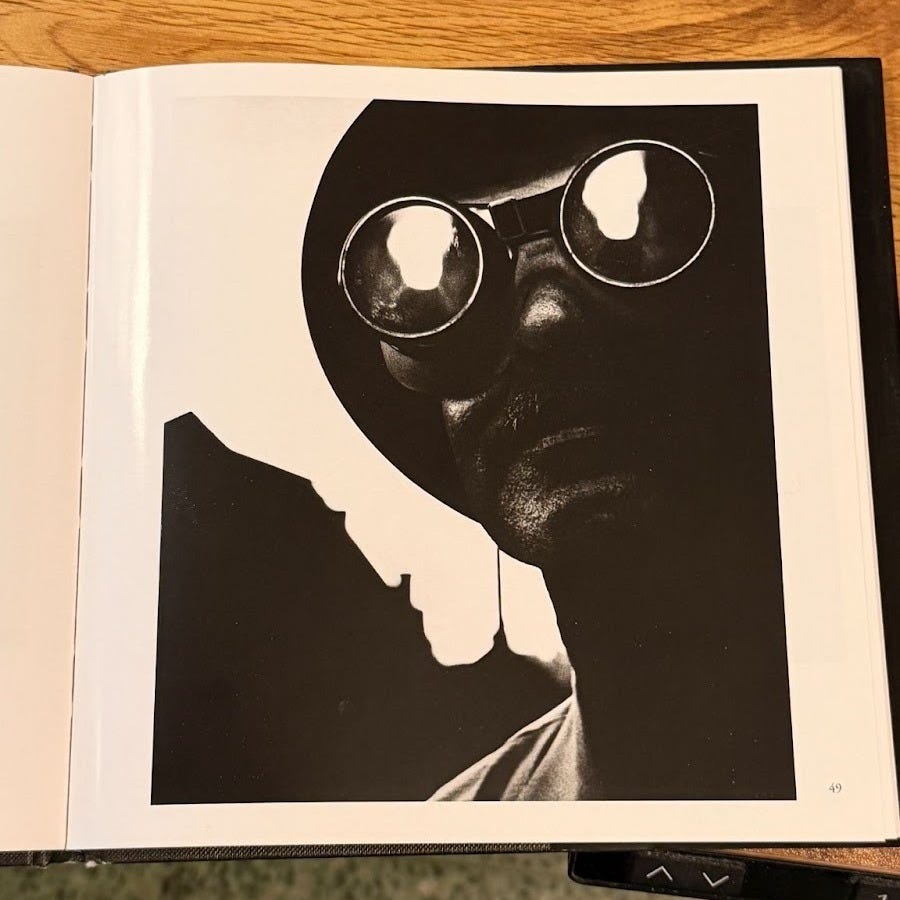
The image stares back from the page with the intensity of a religious icon, stripped of mercy and forged in fire. It is W. Eugene Smith’s portrait of a steelworker, a man whose identity has been consumed by the protective gear of his trade. The hard hat forms a dark halo; the safety goggles are not windows to the soul, but mirrors reflecting a terrifying, molten reality. When I look at this photograph, I do not just see a record of mid-century American industrial might. I see a ghost. I see the phantom that chased me down the highway from Washington D.C. to Pittsburgh in 1982, when I set out on a pilgrimage to capture the end of a certain world that Smith had documented at its peak.
Smith’s Pittsburgh project was legendary—a labyrinthine, obsessive failure of ambition that produced some of the most haunting images in the history of photography. But this specific image, the “Goggles” shot, serves as the Rosetta Stone for his entire tortured psyche. It has been said by a biographer that “while the Pittsburgh essay was a powerful and accurate visual portrait of an industrial city in the throes of change, its great significance lies in its being a symbolic rendering of Smith himself. The image he crafted to open his layout was of a steelworker whose tightly cropped head was encircled by the dark underside of a hard hat. In his darkroom, Smith had perfected the paired reflections of a blast furnace in the smoky lens of this man’s goggles. Fire and brimstone... always interpreted this image as a symbolic self-portrait of the secret Gene Smith.”
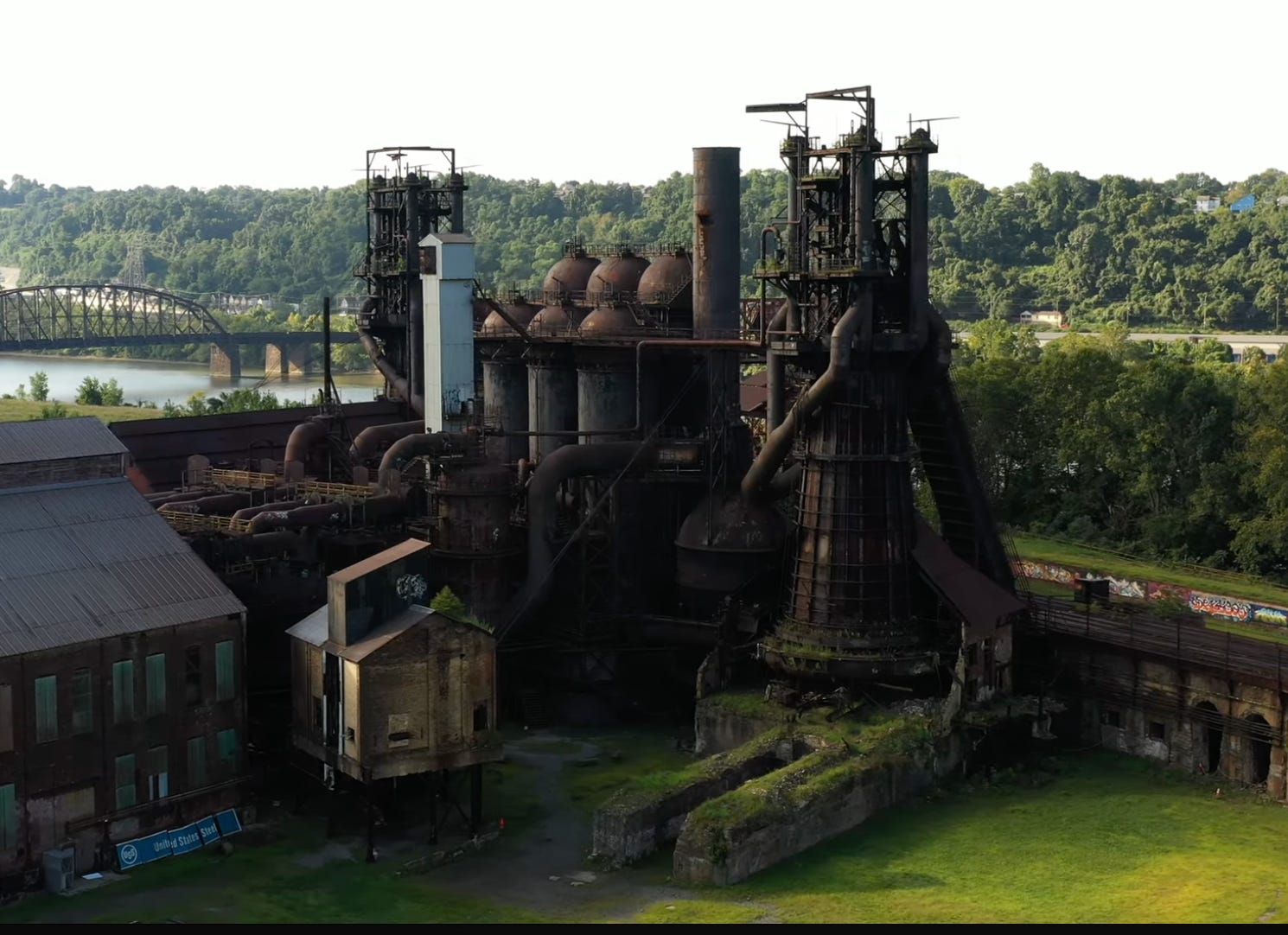
In 1982, I drove toward that same fire and brimstone, but I arrived ahead of the funeral. I went to Pittsburgh not to celebrate the forging of steel, but to witness the dynamiting of the last active blast furnace in the region by U.S. Steel. The American century of steel was bleeding out. The monolithic dominance Smith captured in the 1950s had been eroded by efficient competition from Japan and South America, a precursor to the modern era where the skylines of the world are erected with steel from China.
As I stood there in ‘82, cameras around my neck, I realized I was trying to “update” a vision that had already consumed its creator. Smith’s photograph is technically a document of labor, but emotionally, it is a document of obsession. In the darkroom, Smith burned and dodged, manipulating the print until the reflection in those goggles burned with the same intensity as the demons in his own mind. He saw himself in that heat. He saw the artist not as a passive observer, but as a worker standing too close to the flame, shielded only by the thin glass of his lens, reflecting the chaos of the world while remaining impenetrable behind the mask.
My journey in 1982 was a study in contrast. Smith looked into the goggles and saw the birth of infrastructure; I looked at the Dorothy Six furnace and saw the death of an economy. Smith’s image is loud; you can almost hear the roar of the blast oxygen and the hiss of slag. My experience was defined by a terrifying silence, followed by the concussive thump of demolition. The dust that rose that day didn’t smell like money or progress; it smelled like rust and obsolescence. From that moment on, The University of Pittsburgh Medical Center became the largest employer in the Pittsburgh region, with tens of thousands of employees across its hospitals, clinics, and insurance operations… not steel.
Yet, the power of Smith’s “self-portrait” is that it transcends the economic reality of steel. Whether the furnaces are burning or being blown up, the photograph remains a testament to the burden of witnessing. Smith felt that burden more than anyone. He took thousands of images of Pittsburgh, drowning in the sheer volume of his attempt to capture the “soul” of the city. He failed to organize them, just as the city eventually failed to organize its own survival against the global market.
When I look at this print now, holding the book in my hands, I feel a kinship with that “secret Gene Smith.” In 1982, I was chasing the ghosts of industry, trying to make sense of a shift that would leave the Rust Belt hollowed out. I wanted to see what Smith saw. But Smith didn’t just see a steel mill. He saw the fire that makes and destroys. He saw the hellfire of creation.
The steelworker in the photo is anonymous, a stand-in for every human being who trades their sweat for existence. But the reflection—that searing white light in the goggles—that is pure Gene Smith. It is the manic, drug-fueled, sleepless, perfectionist stare of a man who looked at the world so hard it burned him. In 1982, as the dust settled over the Monongahela River and the blast furnace crumbled into a heap of scrap, I realized that while the industry could die, and the economy could shift to China or Brazil, the image remains.
The fire in those goggles doesn’t go out. It stares back at us, a permanent reminder of the heat required to build a world, and the personal cost paid by the men who document it. I feel embarrassed sometimes that I thought I could update that kind of vision. Not so…the man stands as a witness to an era never to be seen again.