
The Ground Upon Which I Stand
Service as Spiritual Practice

In the quiet recitation of the Five Remembrances, the Soto Zen Buddhism tradition offers a profound reckoning with reality. While the first four remembrances deal with the inevitability of aging, illness, death, and separation—realities that happen to us—the fifth remembrance shifts the locus of power back to the individual. It states: “My actions are my true belongings. I cannot escape the consequences of my actions. My actions are the ground upon which I stand.”
This is not a fatalistic warning about punishment, but rather an empowering declaration of cause and effect. It suggests that in a universe of impermanence, where I cannot hold onto my youth, my health, or even my loved ones, the only thing that truly remains mine is the energy I release into the world. My identity is not constructed by my material possessions, but by the cumulative weight and direction of my deeds. When I examine the architecture of my own life through this lens, I see that the “ground” I stand on is built through my engagement with others—specifically through my work with En Vía, my support for those battling addiction, my photography of the marginalized, and the writing that codifies my principles.
My work with En Vía constitutes a significant portion of this spiritual ground. In the valleys of Oaxaca, where tourism often extracts value without returning it, En Vía strives to create a cycle of reciprocity through microfinance and responsible education. When I participate in this work, my “actions” are not merely administrative or logistical; they are acts of solidarity. By facilitating interest-free loans and educational programs for entrepreneurial women, I am engaging in actions that insist on dignity and economic justice.
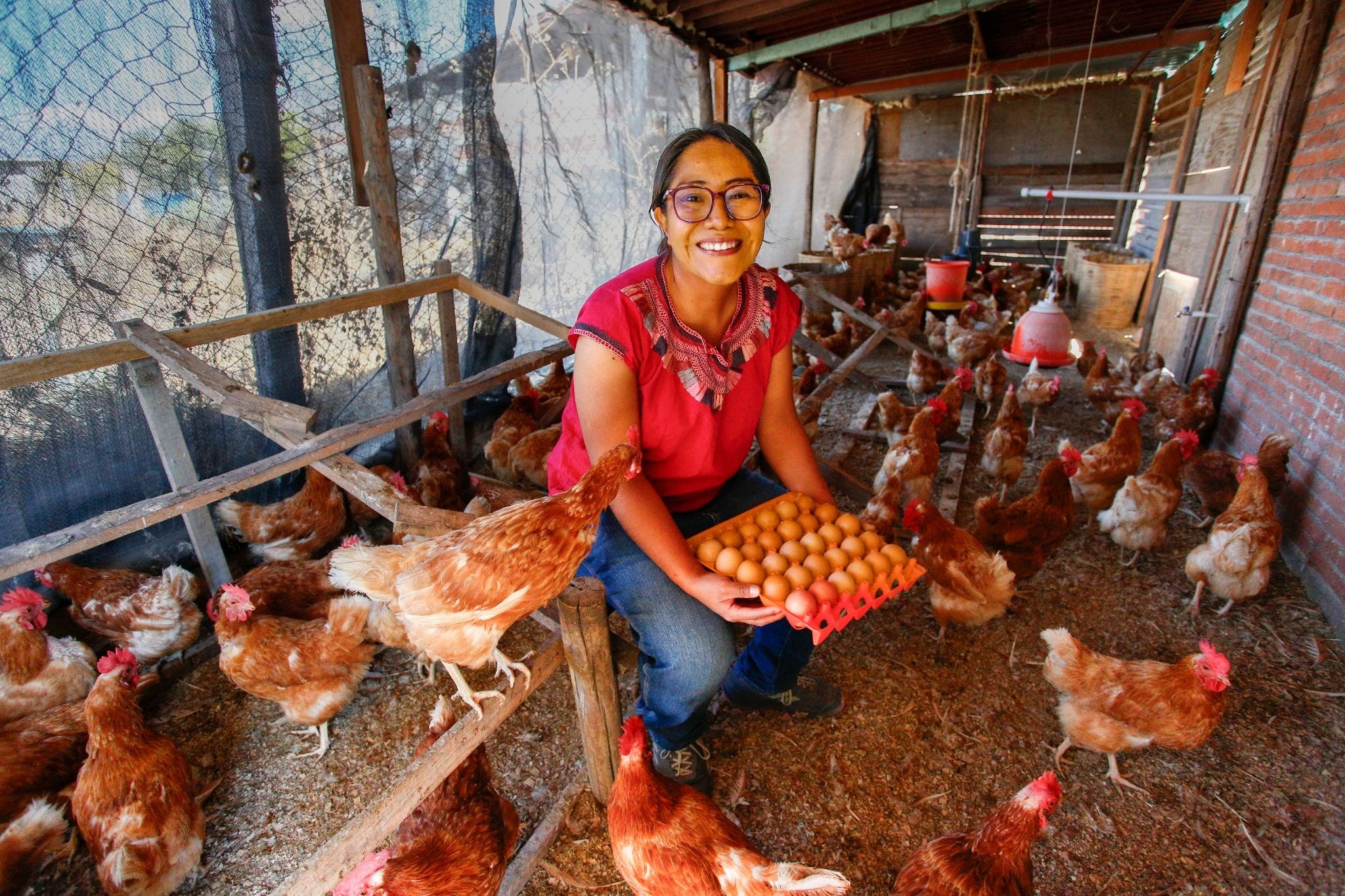
Cristy Martínez Molina and her chickens - Fueled by an interest-free business loan from EnVia, Cristy has a thriving business selling eggs and chickens to restaurants and individuals in Teotitlan de Valle, Mexico, and has repaid her loan in full.
The Fifth Remembrance teaches me that I own the consequences of these interactions. The consequence here is not financial profit for myself, but the creation of a shared reality where empowerment is possible. When a woman in Teotitlán del Valle expands her weaving business or sends her daughter to school because of these programs, that resilience becomes part of my “true belongings.” I possess nothing of the money involved, yet I possess the karma of the interaction. The ground I stand on becomes firmer because it is reinforced by the strength of the community I serve.
This concept of consequences becomes even more visceral in my work with people addicted to alcohol and other drugs. Addiction is often a crisis of isolation, a crumbling of the ground beneath a person’s feet. When I work with individuals in recovery, my action is often one of radical presence—the act of sitting with suffering without looking away.
Soto Zen teaches that we are inter-existent; my well-being is inextricably tied to the well-being of others. If I were to act with judgment or indifference, the consequence would be a reinforcement of stigma and separation, creating a fractured ground for both the addict and myself. However, by offering support, listening, and guidance, the consequence is a ripple of healing. I cannot escape the consequences of this compassion; it changes me as much as it changes them. It softens my ego and broadens my understanding of the human condition. My “belongings” in this context are not medals of virtue, but the shared moments of clarity and sobriety that we build together.
Similarly, my photography projects compel me to examine what it means to “stand” on the ground of my actions. When I photograph the lives of migrants and people disenfranchised by society, I am making a choice about where to cast my gaze. In a world that often chooses blindness regarding the plight of the displaced, the act of seeing is a moral action.
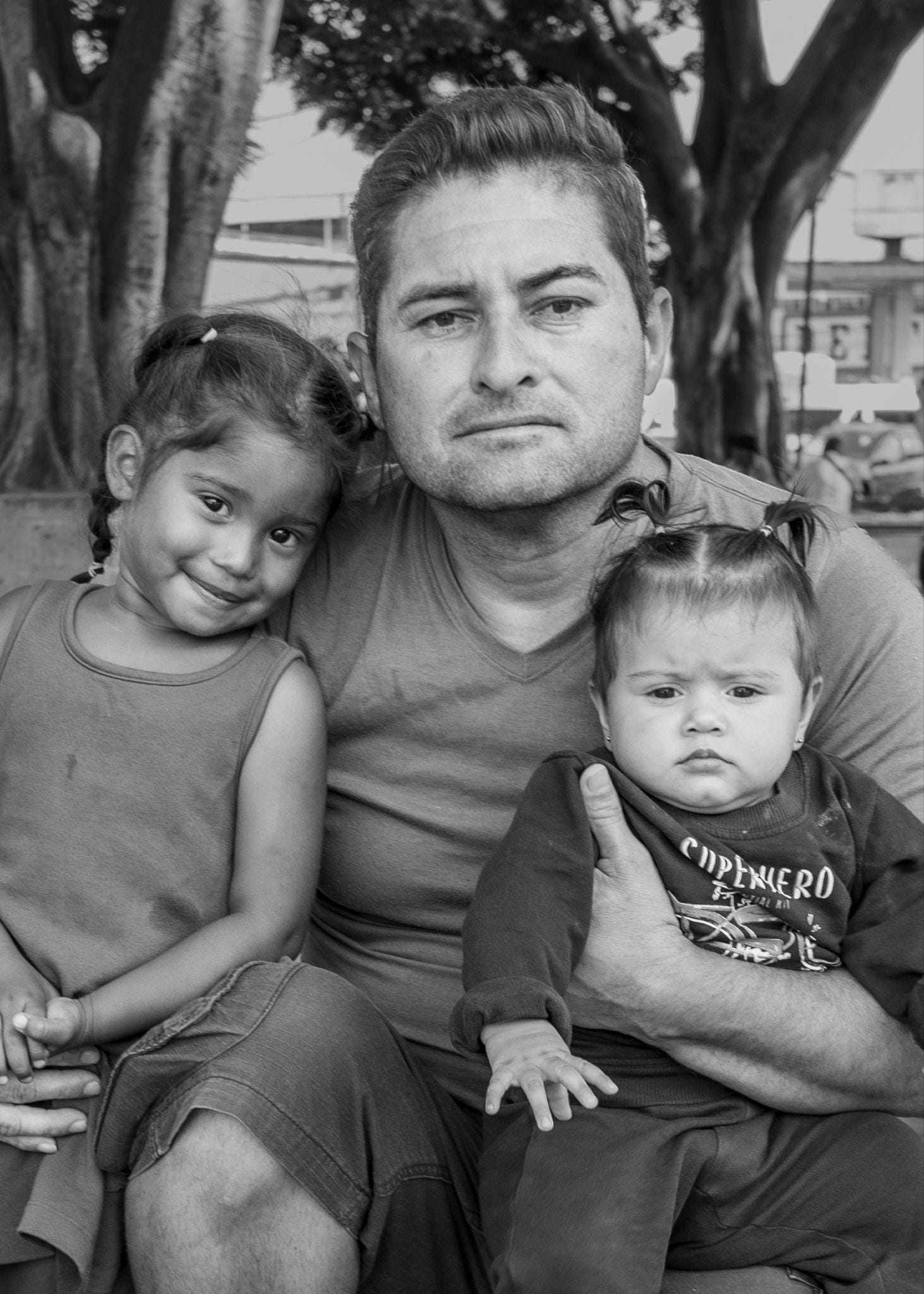
Migrant Father - Hector and his children, Elsebeth and Imelda, are typical of the thousands of migrants who have passed through the state of Oaxaca seeking a more safe and secure life than their home in Guatemala.
The camera is not a shield, but a bridge. When I frame the face of a migrant, I am acknowledging their existence, their struggle, and their humanity. The Fifth Remembrance reminds me that if I were to ignore these stories, my ignorance would also be an action with consequences—specifically, the consequence of complicity in their erasure. By choosing to document their lives, I am gathering “belongings” of truth and testimony. These images serve as proof that we were here, that we saw one another, and that we did not turn away. The ground I stand on is paved with these images, forcing me to remain awake to the inequalities of the world.
Finally, my writing serves as the mortar that holds these bricks of action together. Writing about the principles that hold my life together is the action of reflection. It is how I navigate the “ground” mentioned in the Remembrance. Without the introspection of writing, my actions might become reactive or untethered. By articulating my values, I ensure that my deeds with En Vía, with those in recovery, and with my subjects, are aligned with my true intention.
Ultimately, the Fifth Remembrance strips away the illusion that we can hide from who we are. We are what we do. At the end of my life, I will not be surrounded by my bank account or my accolades. I will be surrounded by the women of Oaxaca, the individuals in recovery, the migrants in my photographs, and the words I have written. These connections, born of my actions, are the only things that are truly mine.
They are the ground upon which I stand, now and forever.